Every child develops at their own pace. Some children walk early but talk later, others are chatty but cautious in social settings. This natural variation can make it difficult for parents to know when a behaviour is simply part of individual development or something worth discussing with a health professional. While no single sign confirms autism, certain patterns may appear early and are worth paying attention to.
One of the most commonly noticed signs is inconsistent eye contact. Autistic children may make less eye contact, or use it differently, not because they are disinterested or rude, but because social cues are processed in another way. Some children may look briefly, then away, or focus on objects rather than faces while listening. This does not mean they are not engaged — it often means they are taking in information differently.
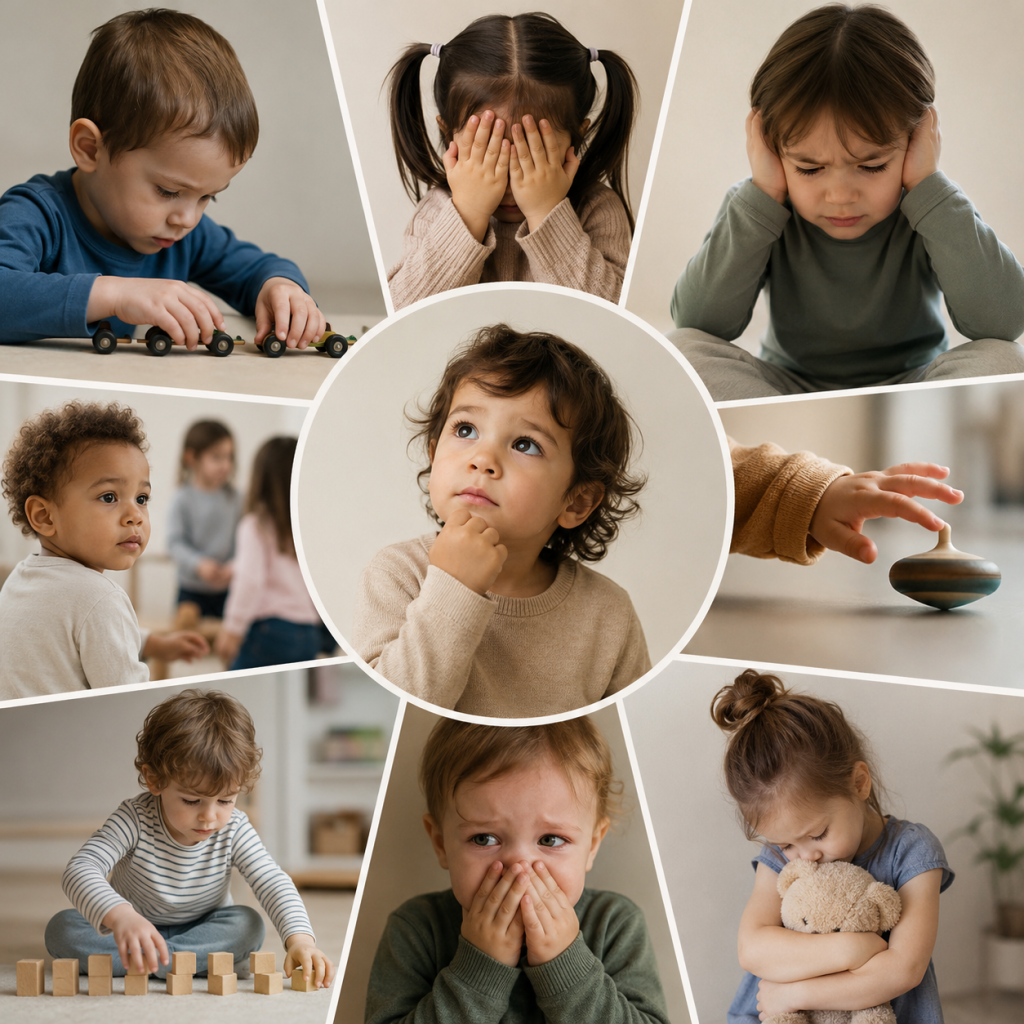
Speech and language development can also look different. Some children on the spectrum may speak later than expected, even though they understand far more than they can express. Others may use gestures, sounds or facial expressions effectively but struggle with spoken words. Delayed speech does not always signal autism, but when combined with other developmental differences, it is worth raising with a GP or paediatrician.
Repetitive movements or behaviours are another early sign parents often notice. Rocking, spinning, hand-flapping or repeating words and phrases can help a child regulate their emotions or manage sensory input. These behaviours are often soothing rather than disruptive, even if they look unusual to others. Understanding their purpose can help carers respond with empathy rather than concern alone.
Social engagement may also differ. Some children prefer solitary play, parallel play, or short bursts of interaction followed by quiet time. Others may want to connect but find the social world overwhelming and need frequent breaks. These differences are not a lack of interest in others, but a reflection of how social energy is managed.
Sensory differences are another key area. Heightened reactions to sounds, textures, lights or smells can appear early in childhood. A child might cover their ears, avoid certain clothing, refuse specific foods or become distressed in noisy or brightly lit environments. These reactions are not behavioural choices — they are genuine sensory responses.
Resistance to change is also common. Sudden shifts in routine, environment or expectations can trigger big emotions. Predictability helps many autistic children feel safe, and disruptions may feel overwhelming without warning or preparation.
Early awareness simply opens the door to support. Gentle encouragement, patience and early guidance can make a meaningful difference, helping children feel understood and supported as they grow.
If you have concerns, trust your instincts and speak with your GP first or paediatrician. Early conversations do not rush diagnoses — they create opportunities for understanding, reassurance and support. Every child deserves the chance to thrive in their own way, with the right support around them.