
Artificial intelligence (AI) is turning up everywhere these days—from the way we search for information to the apps our children use at school. For parents, especially those raising children on the spectrum or with additional learning needs, the big question is: will AI really help our children learn, or could it do more harm than good?
The honest answer is that it depends on how it’s used.
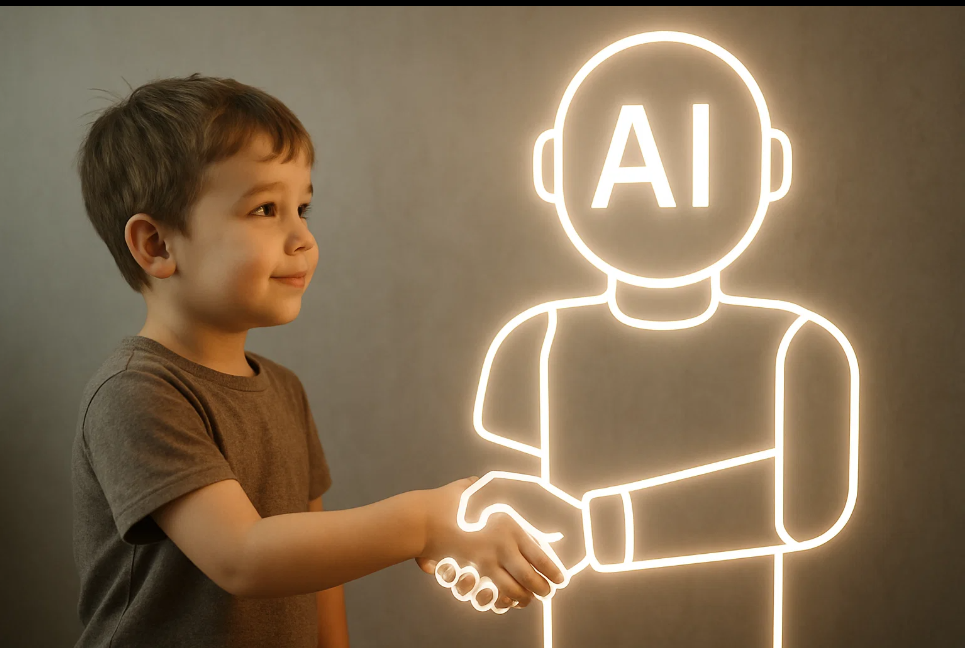
Where AI Can Help – When used thoughtfully, AI has the potential to make learning more accessible and engaging. Many programmes are designed to adapt to a child’s pace. This means if your child needs more time on one skill or races ahead in another, the system adjusts. For children who may not fit neatly into the ‘average’ classroom model, this personalisation can be a huge advantage.
AI can also open the door to curiosity-driven learning. Children can follow their own interests and explore topics that light them up—whether that’s dinosaurs, coding, or space. For neurodivergent learners, this can be especially powerful. Some AI tools provide text-to-speech support, simplify complex language, or offer visual prompts, making learning more inclusive and reducing frustration.
In many ways, AI can act like an extra support tool. For a child with dyslexia, it might help with reading. For a child with ADHD, it might provide reminders and structure. It’s not about replacing teachers or parents, but about offering another layer of support that can help children feel more confident in their learning.
But AI isn’t a magic solution—and there are real risks if it’s overused.
One concern is that children may become too reliant on AI for answers. Struggling with a tricky question or working through trial and error builds problem-solving skills and resilience. If AI removes all those challenges, children miss valuable opportunities to practise persistence.
Too much screen-based learning can also impact attention span. Many AI platforms are designed for quick responses, which can make it harder for children to focus deeply on a single task. For children who already find attention and focus challenging, this can be a drawback.
Another issue is memory. If children are always turning to AI for instant answers, they may store less information themselves. A solid base of knowledge is essential—it’s what allows children to connect ideas, be creative, and apply their learning in everyday life.
The key is balance. AI can be an ally, but it should never replace human connection, play, or real-world experiences. Parents can encourage children to use AI for exploring interests, practising skills, or getting extra support—but not as the only way they learn.
Simple steps can help:
- Set limits on screen time.
- Balance online learning with outdoor play, family activities, and creative projects.
- Talk with your child about what they’ve learnt and how they figured it out.
- Encourage problem-solving without always turning to AI straight away.
AI has great potential to support children, including those on the spectrum or with additional needs. It can personalise learning, reduce barriers, and open doors to new discoveries. But it should be a tool—not the teacher. With your guidance, AI can boost confidence and curiosity while still leaving room for resilience, creativity, and connection to grow.